The Technology Quietly Reshaping the World
Imagine sending money to a friend in Toronto, a colleague in Berlin, and a supplier in New York — all within seconds, with no bank involvement, no fees eaten up by intermediaries, and a permanent, tamper-proof record of every transaction. That is not science fiction. That is blockchain, and it is happening right now, in real time, in every corner of the globe.
For many Canadians, blockchain still feels like a buzzword — something associated with Bitcoin headlines or tech conferences. But the reality is far more practical, far more powerful, and far more relevant to everyday financial life than most people realize. Whether you are a curious beginner trying to understand what blockchain actually is, a working professional eyeing a career change into a high-paying role as a blockchain engineer, or an investor exploring a blockchain ETF in Canada, this guide was written specifically for you.
In this article, you will get a clear, jargon-free breakdown of how blockchain works, how to read a blockchain explorer, how blockchain exchanges function, what a blockchain engineer salary looks like in 2026, and which blockchain ETFs are worth your attention in Canada, the USA, and Europe. By the end, you will not just understand blockchain — you will know how to act on that knowledge.
What Is Blockchain? Blockchain Explained for Beginners
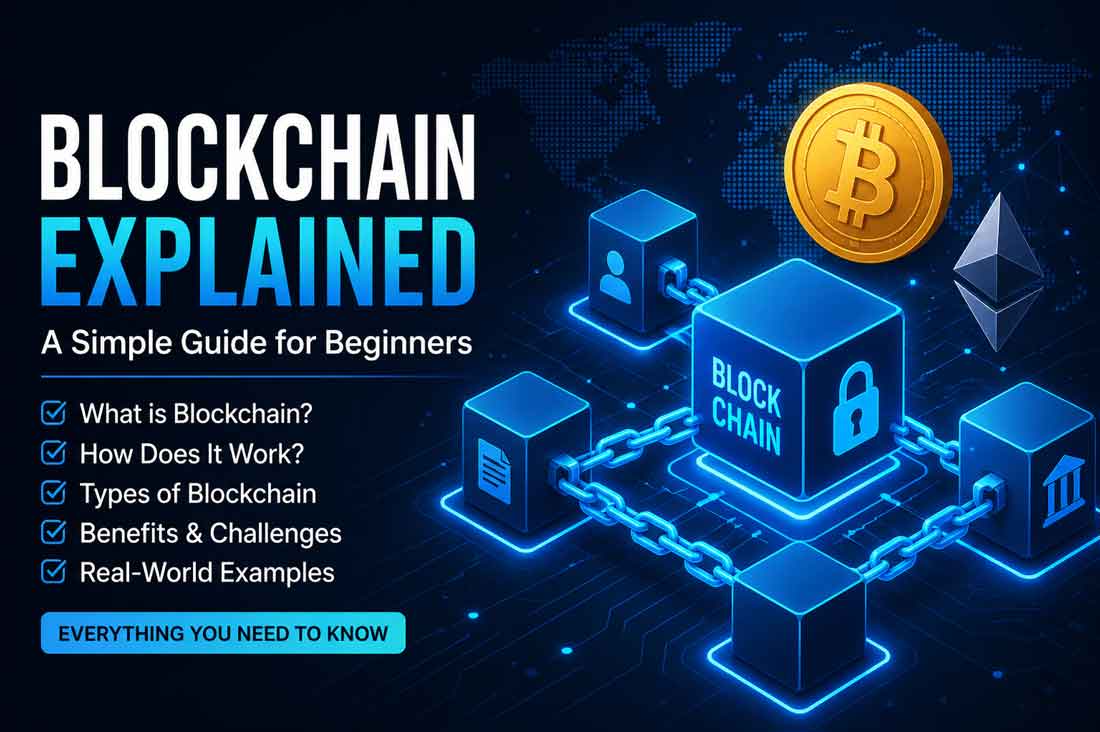
At its most fundamental level, a blockchain is a digital ledger — a continuously updated record of transactions or data that is shared across thousands of computers simultaneously. Unlike a traditional database controlled by a single company or government, a blockchain has no central authority. Every participant in the network holds a copy of the same ledger, and every new entry must be verified by the majority of participants before it is accepted.
The name “blockchain” comes directly from how data is stored. Transactions are bundled together into groups called blocks. Each block is then cryptographically linked — or chained — to the block before it, creating a chain of blocks going all the way back to the very first transaction. This structure makes the data extraordinarily difficult to alter. If someone tried to change a single transaction buried deep in the chain, they would need to simultaneously alter every block that came after it across every copy of the ledger worldwide. The computing power required to do that is, for all practical purposes, impossible.
A real-world blockchain example that many Canadians interact with indirectly is the Bitcoin network. Every time someone sends Bitcoin, that transaction is broadcast to the network, verified by thousands of computers called nodes, bundled into a block, and permanently recorded. No bank approves it. No government clears it. The code itself enforces the rules.
But blockchain is far bigger than Bitcoin. Supply chains now use blockchain to track food from farm to store shelf. Healthcare systems use it to secure patient records. Canada’s major financial institutions are actively piloting blockchain-based settlement systems that could fundamentally change how money moves between banks.
How a Blockchain Explorer Works
If blockchain is the ledger, then a blockchain explorer is the tool that lets you read it. Think of it as a search engine specifically built for blockchain data. Anyone — with no account, no permission, and no fee — can open a blockchain explorer and look up any transaction ever recorded on that blockchain.
What Is a Blockchain Explorer for Bitcoin Transactions?
A blockchain explorer for Bitcoin transactions allows you to search for specific wallet addresses, transaction IDs (called TXIDs), or block numbers. When you enter a Bitcoin wallet address, the explorer shows you every transaction associated with that address — how much Bitcoin entered, how much left, and when each movement occurred. All of this information is public by design.
The most widely used blockchain explorers include Blockchain.com, Blockchair, and Mempool.space. Each one indexes the Bitcoin blockchain in real time and presents the data in a readable format.
How to Use a Blockchain Explorer in Practice
Suppose you send 0.05 Bitcoin to a friend. Within minutes, you can paste your transaction ID into a blockchain explorer and see the status: whether it is pending (in the mempool, waiting to be included in a block), confirmed (included in one block), or fully settled (confirmed by six or more subsequent blocks). For Canadians using Bitcoin as a cross-border payment tool, this transparency is enormously reassuring.
Blockchain explorers are also widely used by researchers, journalists, law enforcement agencies, and compliance officers tracking the movement of funds for regulatory or investigative purposes. The public nature of the blockchain makes it one of the most auditable financial systems ever created.
Blockchain ETF in Canada: Your Complete Investment Guide
For Canadians who want exposure to the growth of blockchain technology without the complexity of buying cryptocurrency directly, a blockchain ETF offers a compelling middle ground. These exchange-traded funds hold shares in companies that are deeply involved in blockchain development, cryptocurrency mining, financial technology, or digital asset infrastructure.
What Is a Blockchain ETF?
A blockchain ETF is a fund traded on a stock exchange — just like any other ETF — whose underlying holdings are companies positioned to benefit from blockchain technology. Rather than buying Bitcoin or Ethereum directly, you buy units of a fund that might hold shares in companies like Coinbase, Galaxy Digital, Hive Digital Technologies, or other blockchain-adjacent businesses.
Best Blockchain ETFs to Invest in Canada in 2026
- Canada has been a global leader in cryptocurrency and blockchain ETF innovation. The Toronto Stock Exchange (TSX) and the Canadian Securities Exchange (CSE) host several notable options:
- Purpose Bitcoin ETF (BTCC) — Canada made history in February 2021 by becoming the first country in the world to approve a Bitcoin ETF. BTCC holds actual Bitcoin, not stocks, and trades directly on the TSX. It remains one of the most straightforward ways for Canadian retail investors to gain Bitcoin exposure through a registered account like a TFSA or RRSP.
- Fidelity Advantage Bitcoin ETF (FBTC) — Managed by Fidelity, this ETF offers institutional-grade custody and appeals to investors who want the reassurance of a globally recognized asset manager handling the underlying Bitcoin holdings.
- Evolve Cryptocurrencies ETF (ETC) — This fund offers diversified exposure across Bitcoin and Ethereum, making it suitable for investors who want broader cryptocurrency exposure rather than a single-asset bet.
- CI Galaxy Blockchain ETF (CBLT) — For investors who prefer equity exposure over direct cryptocurrency holdings, this ETF holds shares in blockchain-related companies, offering a more traditional equity risk profile.
Key Considerations for Canadian Blockchain ETF Investors
Before investing, Canadian investors should understand several important points. First, blockchain ETF investments held inside a TFSA or RRSP can grow tax-sheltered, which is a significant advantage over holding cryptocurrency in a taxable account where every transaction may trigger a capital gain. Second, blockchain ETFs tend to be volatile — these are high-growth, high-risk investments suited to a long time horizon. Third, management expense ratios (MERs) vary significantly between funds, so comparing costs is essential.
Always consult with a registered financial advisor before making investment decisions. This article provides educational information only and does not constitute financial advice.
Blockchain Exchange: How Does It Work?
A blockchain exchange — more commonly called a cryptocurrency exchange — is a digital marketplace where people buy, sell, and trade blockchain-based assets. Understanding how a blockchain exchange works is essential for anyone looking to participate in this market directly.
Centralized vs. Decentralized Exchanges
There are two main types of blockchain exchanges. Centralized exchanges (CEX) like Coinbase, Kraken, Bitbuy (Canada), or Newton operate similarly to traditional stock brokerages. You create an account, verify your identity, deposit funds, and trade. The exchange acts as a trusted intermediary, matching buyers and sellers and holding assets in custody on your behalf.
Decentralized exchanges (DEX) like Uniswap or dYdX operate entirely on blockchain smart contracts. There is no company in the middle. Trades happen automatically through code, and users retain custody of their own assets throughout the process. DEXs offer greater privacy and control but require more technical knowledge.
How Blockchain Exchange Verification Works
When you register on a centralized exchange in Canada, you will go through a Know Your Customer (KYC) process, which may include submitting a government-issued ID and proof of address. This is required under Canadian anti-money laundering (AML) regulations enforced by FINTRAC. Reputable exchanges operating in Canada must register with FINTRAC as a Money Services Business.
Blockchain Engineer: Career, Skills, and Salary in 2026
If there is one career that consistently appears at the intersection of technology and finance, it is the role of a blockchain engineer. Demand for qualified blockchain developers has grown sharply across Canada, the United States, and Europe, and the salary numbers reflect that demand clearly.
What Does a Blockchain Engineer Do?
A blockchain engineer designs, builds, tests, and maintains blockchain-based systems. Depending on the employer and the project, this might mean writing smart contracts on Ethereum, building decentralized applications (dApps), integrating blockchain APIs into existing financial systems, or developing entirely new blockchain protocols from the ground up.
The role sits at the crossroads of software development, cryptography, distributed systems, and finance. It demands both technical depth and the ability to communicate complex concepts to non-technical stakeholders — a combination that is genuinely rare and therefore well compensated.
Blockchain Engineer Salary in 2026
Blockchain engineer salary in 2026 varies significantly by region, experience level, and employer. Here is a realistic breakdown based on current market data:
Canada: Entry-level blockchain developers in cities like Toronto, Vancouver, and Montreal can expect salaries in the range of CAD $80,000 to $100,000 per year. Mid-level engineers with three to five years of blockchain-specific experience typically earn between CAD $110,000 and $150,000. Senior blockchain architects and lead engineers at major financial institutions or technology firms can command CAD $170,000 to $220,000 or more, with additional equity and bonus compensation on top of base salary.
United States: Blockchain engineers in the US earn among the highest technology salaries globally. Entry-level roles in cities like New York, San Francisco, and Austin start around USD $95,000 to $120,000. Senior engineers at DeFi protocols, crypto exchanges, or major banks exploring blockchain infrastructure regularly earn USD $180,000 to $280,000, with some senior protocol engineers at leading projects earning significantly more through token compensation.
Europe: In the United Kingdom, Germany, Switzerland, and the Netherlands — the European hubs for blockchain development — blockchain engineers earn between EUR $70,000 and $160,000 depending on seniority and location. Switzerland’s “Crypto Valley” around Zug remains one of the highest-paying locations for blockchain talent on the continent.
How to Become a Blockchain Engineer
How to become a blockchain engineer is one of the most common questions among developers looking to transition into the blockchain space. Here is a practical roadmap:
- Step 1: Master the fundamentals. Before touching blockchain-specific tools, ensure you have strong foundations in one or more programming languages. Solidity (for Ethereum smart contracts), Rust (for Solana), and Go (for Hyperledger Fabric) are among the most in-demand languages. Python and JavaScript are also widely used in blockchain development.
- Step 2: Learn how blockchains actually work. Read the original Bitcoin whitepaper by Satoshi Nakamoto. Work through the Ethereum documentation. Understand consensus mechanisms like Proof of Work and Proof of Stake at a technical level.
- Step 3: Build projects. The fastest way to develop credibility in the blockchain engineering community is through a public portfolio of actual projects. Deploy a smart contract on a testnet. Build a simple DEX. Create a token. Host your code on GitHub.
- Step 4: Earn recognized certifications. Programs from the Blockchain Council, Consensys Academy, and the Certified Blockchain Professional (CBP) program from the EC-Council are widely recognized by Canadian and international employers.
Step 5: Join the community. Blockchain is an open-source ecosystem. Contributing to established projects, attending developer conferences like ETHGlobal or Consensus, and participating in hackathons significantly accelerates career growth.
Real-World Blockchain Examples Across Industries
One of the most powerful ways to understand blockchain is through concrete real-world blockchain examples that go beyond cryptocurrency.
- Supply Chain Transparency: Walmart Canada partnered with IBM to build a blockchain-based food traceability system. Using this platform, the company can trace the origin of any food product — from a specific farm to a specific store shelf — in seconds rather than days. This dramatically improves recall response times and food safety outcomes.
- Healthcare Records in Europe: Several European Union member states, including Estonia, have implemented blockchain-based systems for managing citizen health records. Estonia’s X-Road digital infrastructure — which incorporates blockchain verification — allows healthcare providers to securely share patient data while maintaining a tamper-proof audit trail of every access event.
- Cross-Border Payments in Canada: Canadian fintech companies like Moven and Interac have explored blockchain-based solutions for real-time cross-border payments. The goal is to eliminate the multi-day settlement delays and high fees associated with traditional wire transfers.
- Digital Identity Verification: The province of British Columbia piloted a blockchain-based digital identity system that allows residents to prove their identity to government services online without sharing unnecessary personal data. Similar initiatives are underway in the European Union under the eIDAS 2.0 framework.
Takeaways
- Blockchain is a decentralized digital ledger that records transactions across thousands of computers, making data tamper-proof and transparent without requiring a central authority.
- A blockchain explorer is a free, publicly accessible tool that allows anyone to search, verify, and audit any transaction ever recorded on a blockchain — including all Bitcoin transactions in real time.
- Blockchain ETFs in Canada offer a regulated, tax-efficient way to gain exposure to blockchain technology through a TFSA or RRSP, with options ranging from direct Bitcoin ETFs to equity funds holding blockchain-related companies.
- A blockchain exchange is a marketplace for buying and selling blockchain-based assets; Canadian platforms must register with FINTRAC and comply with anti-money laundering regulations.
- Blockchain engineers are among the highest-paid technology professionals in Canada, the United States, and Europe, with senior-level salaries exceeding CAD $200,000 in major Canadian cities.
- Becoming a blockchain engineer requires mastery of relevant programming languages, deep knowledge of distributed systems, a practical project portfolio, and active participation in the open-source blockchain community.
- Real-world blockchain applications extend far beyond cryptocurrency into supply chain management, healthcare records, digital identity, and cross-border payments — industries that touch every Canadian’s daily life.
Conclusion: Your Blockchain Journey Starts Now
Blockchain is not a distant technological concept reserved for Silicon Valley engineers or Wall Street traders. It is a living, working infrastructure that is quietly transforming how Canadians, Americans, and Europeans handle money, data, and trust. Whether your interest is in understanding how this technology actually works, investing through a blockchain ETF in Canada, using a blockchain explorer to audit your own transactions, exploring a career as a highly paid blockchain engineer, or simply satisfying the curiosity that brought you here — you now have the foundation you need.
The blockchain revolution is still early. The engineers being hired today, the ETF investors making decisions this year, and the businesses integrating blockchain into their operations right now are the ones who will look back in a decade and recognize they moved at exactly the right moment.
What is your next step? Drop a comment below, share this article with someone who is just beginning to explore blockchain, or reach out if you have a specific question. This conversation is just getting started.
Blockchain FAQs
What exactly is a blockchain?
Blockchain is a decentralized digital ledger that records transactions across multiple computers. Each transaction is stored in a block and linked to previous blocks, forming a secure and tamper-resistant chain.
What is blockchain in simple terms?
Blockchain is a shared digital record system where information is stored transparently and cannot be easily altered without network consensus.
What are the top 5 blockchains?
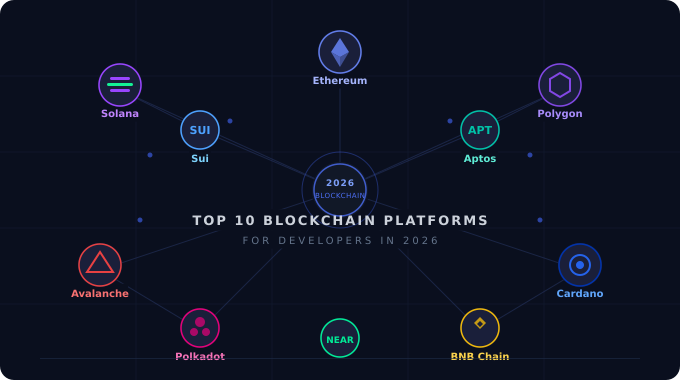
The most widely used blockchain networks include Bitcoin, Ethereum, Binance Smart Chain, Solana, and Cardano.
What is another word for blockchain?
Common alternatives include distributed ledger, decentralized database, and digital ledger system.
What are the 4 types of blockchain?
The four main types are public blockchain, private blockchain, consortium blockchain, and hybrid blockchain.
How does blockchain work for beginners?
Transactions are requested, verified by network participants, grouped into blocks, and then added to a chain of previous records that are permanently stored.
Does Edward Jones offer Bitcoin services?
Edward Jones does not directly offer Bitcoin trading but may provide limited exposure through investment-related products.
Can I buy Bitcoin through Edward Jones?
Direct Bitcoin purchases are not available through Edward Jones. Investors typically use cryptocurrency exchanges instead.
What is the best platform to buy Bitcoin?
Common platforms include Coinbase and Binance, both widely used for buying and trading cryptocurrencies.
How much will $1,000 in Bitcoin be worth in 10 years?
The value is uncertain and depends on market conditions. Cryptocurrency prices are highly volatile and can rise or fall significantly.
What does Warren Buffett say about Bitcoin?
Warren Buffett has expressed skepticism, describing Bitcoin as a speculative asset without intrinsic value.
Is blockchain a good or bad thing?
Blockchain offers benefits such as transparency and security but also presents challenges like high energy usage and technical complexity.
Why can’t I withdraw money from blockchain?
Issues may occur due to lost private keys, exchange restrictions, network delays, or security-related problems.
Will blockchain be replaced by AI?
Blockchain and AI serve different purposes. They are more likely to complement each other rather than compete directly.
What are the disadvantages of blockchain?
Limitations include scalability issues, slower transaction speeds, regulatory uncertainty, and high energy consumption.
Is blockchain completely secure?
While highly secure, blockchain is not entirely risk-free. Vulnerabilities can arise from user errors, hacks on exchanges, or poor security practices.
What is blockchain for beginners?
Blockchain is a system for securely recording digital transactions without relying on a central authority.
How much is $1 in blockchain?
Blockchain itself has no monetary value. Value depends on the cryptocurrency being used, such as Bitcoin.
What is the biggest problem with blockchain?
The main challenges are scalability limitations, slow processing speeds, and high energy consumption.
Does Edward Jones support cryptocurrency?
Edward Jones has limited involvement with cryptocurrency, mainly through indirect investment options rather than direct trading.