Best Software Solutions Every Business and Individual Needs in 2025
The Software Landscape Has Changed — Are You Keeping Up?
Picture this: it is a Tuesday morning in Toronto. A project manager is juggling four browser tabs, two chat apps, and a spreadsheet that has not been updated since last Thursday. Somewhere in Vancouver, a freelance accountant is still using desktop software from 2017. And in Calgary, a small business owner just clicked a suspicious email attachment — and his antivirus software was not active.
Sound familiar?
The right software is no longer a luxury. It is the backbone of how Canadians and Americans work, protect their data, serve their clients, and grow their businesses. Whether you are searching for the best software options for remote team collaboration, trying to understand the difference between SaaS and on-premise software, or simply looking to download video editing software safely, this guide is built for you. In 2025, the software market in North America is valued at over $850 billion CAD, and the pace of change is faster than ever. New tools like Zoho, Zoom, Zotero, and ZKTeco are reshaping how we work, learn, and secure our environments. Open-source platforms are gaining ground. Virtualization is going mainstream. And cybersecurity threats are at an all-time high.
This article covers everything you need to know — from enterprise tools to personal software picks — with a specific lens on what works best in Canada and the United States.
Let us get into it.
What Is Software, and Why Does It Matter More Than Ever?
Software is the invisible engine of modern life. Every app on your phone, every cloud dashboard you log into, every antivirus scan running in the background — all of it is software. At its core, software is a set of instructions that tells a computer what to do. But in 2025, that definition barely scratches the surface.
Software now drives customer relationships, manages payroll, connects distributed teams, and even trains machine learning models. For businesses in Canada and the US, choosing the right software stack is a strategic decision, not just a technical one.
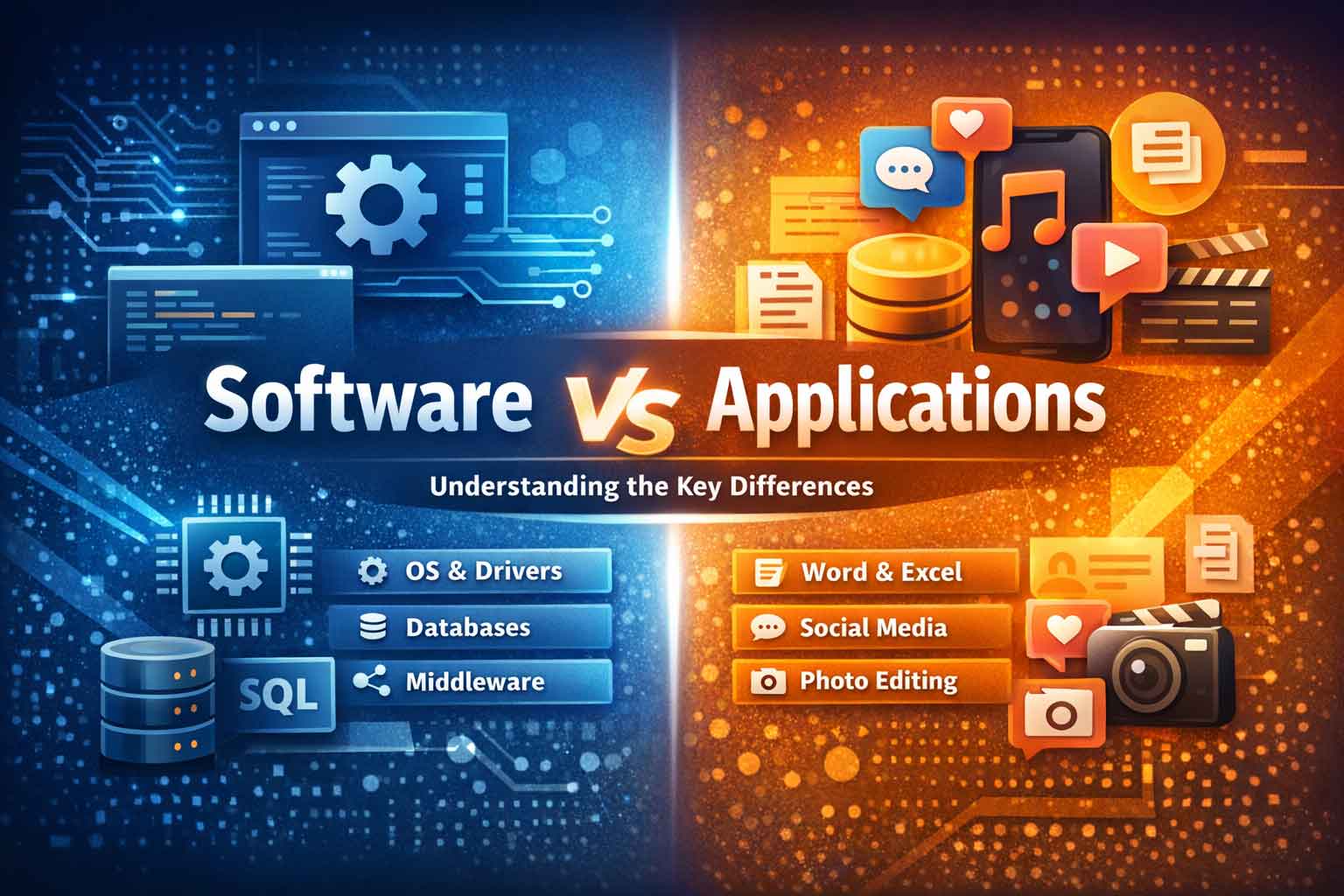
There are three major categories worth understanding:
- System software manages hardware resources. Think operating systems like Windows, macOS, and Linux.
- Application software solves specific problems — accounting software, email clients, video editors, and CRM platforms fall here.
- Development software helps engineers and developers build new tools, including compilers, IDEs, and version control systems.
As remote work, digital commerce, and data-driven decision-making continue to grow, software has become the most important investment a Canadian or American business can make — often more impactful than office space or physical equipment.
Best Software Options for Remote Team Collaboration
Remote work is not going away. According to Statistics Canada, over 20% of the Canadian workforce continues to work remotely or in hybrid arrangements post-2023. For US-based businesses, that number is even higher in technology and finance sectors.
The challenge is clear: how do you keep a distributed team aligned, productive, and connected?
The answer lies in choosing the right remote team collaboration software.
Top Picks for 2025
- Microsoft Teams remains the most widely adopted platform in enterprise Canada, largely because of its tight integration with Microsoft 365. It supports video conferencing, file sharing, task management, and persistent chat — all in one place.
- Slack is the preferred choice for tech-forward startups and creative agencies. Its channel-based structure and deep integration with tools like GitHub, Jira, and Google Drive make it ideal for product and engineering teams.
- Zoom — which many people know simply as software zoom for video calls — has evolved far beyond meetings. Zoom’s whiteboard, webinar tools, and AI summaries make it a full collaboration hub.
- Zoho Cliq is an underrated option. As part of the software Zoho ecosystem, it connects seamlessly with Zoho CRM, Zoho Projects, and Zoho Books, making it especially valuable for small and medium businesses that run entirely on the Zoho stack.
What to Look For
When evaluating remote team collaboration software, prioritize these factors: real-time communication, file version control, cross-platform availability (Windows, macOS, mobile), security and data residency (critical for Canadian companies under PIPEDA), and integration with your existing tools.
The key features to look for in remote desktop software include secure access controls, session recording, multi-monitor support, low-latency performance, and mobile compatibility.
Explaining the Open-Source Software Concept
One of the most misunderstood ideas in technology is open-source software. Many people assume it means low quality or risky. In reality, some of the most powerful and trusted software in the world is open-source — including Linux, Firefox, VLC, and LibreOffice. To explain the concept of open-source software simply: it is software whose source code is made publicly available. Anyone can read it, modify it, and distribute it, usually under a specific license.
Why It Matters for Canadian and US Businesses
Open-source software carries real advantages. There are no licensing fees, which is a significant cost reduction for startups and nonprofits. The code is transparent, meaning security researchers can audit it for vulnerabilities. And because large communities of developers maintain it, updates tend to be frequent and reliable. Tools like Zotero — a free, open-source reference management tool used heavily by Canadian universities and researchers — demonstrate how open-source can rival or outperform paid alternatives. Software Zotero is trusted by academics at institutions like the University of Toronto and McGill precisely because of its transparency and community-driven improvements.
The software zip utility, available across virtually every operating system, is another classic example. The ZIP compression format and its associated tools have been open and freely implementable for decades, becoming a universal standard. For businesses exploring open-source options, the path forward involves evaluating community activity, documentation quality, commercial support options, and license compatibility with your existing tech stack.
Top-Rated Antivirus Software for Personal Computers
Cybersecurity is not optional. In 2024 alone, the Canadian Centre for Cyber Security reported a significant increase in ransomware attacks targeting small businesses, healthcare providers, and municipalities. For individuals and organizations alike, top-rated antivirus software for personal computers is the first line of defense.
Best Antivirus Options in 2025
- Bitdefender Total Security consistently tops independent lab tests from AV-TEST and AV-Comparatives. It offers real-time threat detection, ransomware protection, a VPN, and parental controls — all at a competitive price for Canadian users.
- Norton 360 is another strong contender, offering cloud backup, dark web monitoring, and identity theft protection. It is well-suited for families and individuals who want comprehensive coverage without managing complex settings.
- Malwarebytes Premium is particularly effective at catching newer, behavior-based threats that traditional signature-based antivirus tools miss. Many IT professionals in Canada use it alongside another antivirus as a secondary layer.
- ESET NOD32 has a loyal following among technically savvy users who want a lightweight antivirus that does not slow down their system. It is available with Canadian pricing and support.
Tips for Safe Antivirus Use
Always download antivirus software directly from the vendor’s official website or a trusted app store. Avoid third-party download sites — ironically, these are common vectors for malware disguised as security tools. Keep your antivirus definitions updated automatically. Enable real-time scanning. And do not assume that macOS or Linux systems are immune — while less targeted than Windows, they are increasingly in the crosshairs of sophisticated attackers.
SaaS vs On-Premise Software: What Is the Difference?
The question of what is the difference between SaaS and on-premise software comes up constantly in business planning and procurement decisions across Canada and the US.
Here is a straightforward breakdown.
SaaS (Software as a Service)
SaaS software is hosted in the cloud by the vendor. You access it through a web browser or app, and you pay a subscription fee — monthly or annually. Examples include Salesforce, QuickBooks Online, Zoom, and Shopify. The advantages are significant: no upfront hardware costs, automatic updates, access from any device, and easy scalability. For a startup in Ottawa or a mid-sized firm in Chicago, SaaS dramatically lowers the barrier to adopting enterprise-grade tools. The trade-offs include ongoing subscription costs (which can exceed on-premise licensing over time), dependency on vendor uptime, and potential data sovereignty concerns for businesses handling sensitive Canadian data under PIPEDA or healthcare data under provincial privacy laws.
On-Premise Software
On-premise software is installed and run on servers that your organization owns and manages. Examples include older versions of Microsoft Dynamics, SAP ERP, and certain medical records systems.
The advantages here include full data control, no ongoing licensing fees after purchase, and the ability to customize deeply. However, on-premise requires an IT team for maintenance, significant upfront capital investment, and a longer deployment timeline.
Which Is Right for You?
For most Canadian SMEs, SaaS wins on convenience and cost-effectiveness. For large enterprises in regulated industries — banking, healthcare, government — on-premise or private cloud deployments may still be the right choice. A growing middle ground is hybrid deployment, where some functions run on-premise and others in the cloud.
Where to Download Popular Video Editing Software Safely
Video content is everywhere — YouTube, Instagram, TikTok, LinkedIn. Whether you are a content creator in Montreal, a marketing manager in Dallas, or a small business owner in Winnipeg producing product demos, video editing software is a must-have in your toolkit.
The question many people ask is: where can I download popular video editing software safely?
Trusted Sources and Top Options
- DaVinci Resolve (by Blackmagic Design) is available as a free, professional-grade editor directly from the Blackmagic Design website. It is industry-standard in post-production and used by major studios. The free version is extraordinarily powerful — more than enough for most users.
- Adobe Premiere Pro is available through the Adobe Creative Cloud subscription. Always download it from adobe.com or through the Creative Cloud desktop app. Never use cracked versions — aside from legal issues, pirated software frequently contains malware.
- iMovie (macOS/iOS) and Photos (Windows) are built-in, free, and perfectly safe as starter tools.
- CapCut Desktop has grown rapidly among content creators and is available safely from capcut.com. It offers AI-powered editing tools particularly well-suited for social media content.
Always verify downloads using official sources. Look for HTTPS in the URL, confirmed publisher identity in Windows installer prompts, and use your antivirus software for personal computers to scan any downloaded file before running it.
A software zip file download should always come from a vendor’s official domain. If you are downloading a ZIP archive, right-click and scan with your antivirus before extracting.
How Does Virtualization Software Work?
Virtualization is one of the most powerful concepts in modern computing, yet it remains a mystery to many business owners and IT newcomers. Understanding how virtualization software works is increasingly relevant as businesses move infrastructure to the cloud and developers manage multiple environments.
The Core Concept
Virtualization software creates a “virtual machine” (VM) — essentially a simulated computer running inside your physical computer. A single physical server can host multiple virtual machines, each with its own operating system, applications, and resources.
The software layer that enables this is called a hypervisor. There are two types:
- Type 1 hypervisors (bare-metal) run directly on hardware. Examples include VMware ESXi and Microsoft Hyper-V. These are used in enterprise data centers.
- Type 2 hypervisors run on top of an existing operating system. Examples include VMware Workstation, Oracle VirtualBox (open-source and free), and Parallels Desktop for macOS.
Practical Uses in Canada and the US
Virtualization is used for server consolidation (reducing hardware costs), running multiple operating systems simultaneously (developers often run Linux inside Windows), disaster recovery and snapshots, and cloud infrastructure (AWS, Azure, and Google Cloud are all built on virtualization).
For software developers in Canada, tools like Docker extend the virtualization concept through containerization — a lighter-weight alternative that has become the standard for deploying modern applications. Understanding virtualization lays the groundwork for understanding containers, cloud-native development, and platform scalability.
Affordable Accounting Software for Small Businesses in Canada
Managing finances is non-negotiable for any business. But many small business owners in Canada are still using spreadsheets or outdated desktop tools that do not integrate with CRA e-filing, HST/GST reporting, or major Canadian banks.
Affordable accounting software for small businesses in Canada needs to meet specific requirements: multi-currency support (CAD/USD), CRA-compliant tax tracking, payroll for Canadian employees, and preferably integration with Canadian financial institutions.
Top Choices
- QuickBooks Online is the most widely used accounting software among Canadian small businesses. It supports GST/HST filing, payroll, invoicing, and direct bank feeds from major Canadian institutions including TD, RBC, and BMO. Plans start at approximately $25 CAD/month.
- FreshBooks is designed with freelancers and service-based businesses in mind. Its invoicing, time tracking, and expense management tools are intuitive, and it supports Canadian tax configurations.
- Wave Accounting offers a genuinely free plan (paid add-ons for payroll and payments) and is built specifically for North American small businesses. For a sole proprietor or early-stage startup in Canada, Wave delivers remarkable value.
- Zoho Books — part of the software Zoho family — offers a competitively priced accounting platform that scales well with growing businesses. It includes automated workflows, client portals, and strong inventory management.
- Software Zahir is worth noting for businesses with Middle Eastern or multilingual operational needs, offering Arabic-English support and international accounting standards. While more common outside North America, it serves specific immigrant-owned business communities in Canadian cities like Toronto and Vancouver.
How to Choose Customer Relationship Management Software
Your customers are your business. The software you use to manage those relationships — tracking interactions, managing pipelines, automating follow-ups, and analyzing data — directly impacts revenue and retention. Understanding how to choose customer relationship management software is one of the most important decisions a business leader can make.
Key Evaluation Criteria
- Business size and complexity. A five-person consulting firm in Calgary does not need the same CRM as a 500-person distribution company in Chicago. Match the tool to your actual operational complexity.
- Integration with existing tools. Your CRM should connect with your email client, your accounting software, your marketing platform, and your customer support tools. Disconnected systems create data silos and manual work.
- Ease of use. The best CRM is the one your team actually uses. A complex enterprise system that sits unused destroys ROI. Prioritize adoption over feature count.
- Scalability. As your business grows, your CRM should grow with it. Evaluate both current needs and where you expect to be in three years.
Top CRM Options for Canadian and US Businesses
- HubSpot CRM offers a genuinely powerful free tier that works well for businesses under 50 employees. Its marketing, sales, and service hubs integrate seamlessly.
- Salesforce is the industry standard for enterprise CRM. It is highly customizable but requires dedicated administration and a larger budget.
- Zoho CRM — another key component of the software Zoho ecosystem — offers exceptional value at a mid-market price point. It is particularly popular among Canadian businesses that want comprehensive functionality without Salesforce’s cost structure.
- Pipedrive is a sales-focused CRM popular among B2B companies and sales teams that want a visual pipeline and minimal complexity.
How to Choose an Email Client for a Large Team
Email remains the backbone of professional communication, but how do you choose an email client for a large team? The choice impacts productivity, security, compliance, and even company culture.
What Matters Most
Security and compliance. For Canadian businesses, email containing personal information may be subject to PIPEDA. Ensure your email client supports end-to-end encryption, two-factor authentication, and data residency in Canada or compliant jurisdictions.
- Integration. Your email client should work seamlessly with your calendar, task management, CRM, and document storage. Fragmented tools cost your team hours each week.
- Storage and archiving. Large teams generate enormous email volume. Robust search, thread management, and archival capabilities matter enormously at scale.
- Administration. IT administrators need centralized user management, policy enforcement, and audit logs. Consumer-grade email tools do not offer these.
Best Email Clients for Large Teams in 2025
Microsoft Outlook (via Microsoft 365) is the gold standard for enterprise email. Its integration with Teams, SharePoint, and the broader Microsoft ecosystem makes it the default choice for most Canadian organizations.
Google Workspace (Gmail) is preferred by tech-forward companies and startups. It offers excellent collaboration, search, and integration with Google Docs and Drive.
Zoho Mail — part of software Zoho — offers a privacy-respecting, ad-free email platform with strong administrative controls at a competitive price. Many Canadian SMEs prefer it as an alternative to the Google/Microsoft duopoly.
Thunderbird is an open-source email client managed by the Mozilla Foundation. For organizations prioritizing open standards and privacy, it is a reliable, free option — though it lacks built-in cloud infrastructure.
Understanding Niche Software Tools: Zebra, ZKTeco, Zucchetti, and Zen
Beyond the major names, a range of specialized software tools serve specific industry needs across Canada and the United States. Understanding these platforms helps businesses find purpose-built solutions.
- Software Zebra refers to the software ecosystem developed by Zebra Technologies, which specializes in barcode scanners, label printers, and mobile computing devices used in warehousing, retail, and healthcare. Their software suite — including Zebra Link-OS and Zebra RFID — helps Canadian logistics and retail businesses manage inventory with precision.
- Software ZKTeco is a leading platform for biometric access control and time-attendance management. Used widely in manufacturing plants, offices, and security-sensitive facilities across Canada and the US, ZKTeco software integrates fingerprint, facial recognition, and card-based access with HR and payroll systems.
- Software Zucchetti is an Italian enterprise software suite increasingly present in North American markets through multinational subsidiaries. It covers HR management, payroll, ERP, and accounting — particularly relevant for European-headquartered companies with Canadian or US operations.
Software Zen broadly refers to minimalist, simplicity-focused software philosophies and specific tools like Zen Desk workflows, Zen coding environments, or the Zencart e-commerce platform. The “zen” principle in software design emphasizes reducing complexity, improving usability, and focusing on the user experience above all else — a philosophy that resonates strongly with modern SaaS design trends.
Takeaways
- Remote collaboration tools like Microsoft Teams, Slack, and Zoom are essential for Canadian and US distributed teams. Choose based on integration needs, security, and team size.
- Open-source software — including tools like Zotero, VLC, and LibreOffice — offers powerful, transparent, and cost-free alternatives to paid platforms for individuals and businesses.
- Antivirus software is a non-negotiable investment. Top choices include Bitdefender, Norton, and Malwarebytes. Always download security tools from official vendor websites.
- SaaS vs on-premise is not a one-size-fits-all decision. Most SMEs benefit from SaaS; regulated industries may require on-premise or hybrid approaches.
- Video editing software like DaVinci Resolve and Adobe Premiere Pro should always be downloaded from official sources. Cracked software is a malware risk.
- Virtualization software powers cloud computing, development environments, and server infrastructure. Understanding it is key for IT professionals and forward-thinking business leaders.
- Accounting software choices for Canadian small businesses include QuickBooks Online, Wave, FreshBooks, and Zoho Books — each offering CRA-compatible tax features.
- CRM selection should be driven by team size, integration needs, and adoption likelihood — not just features. HubSpot, Salesforce, and Zoho CRM are top performers.
- Email client selection for large teams should prioritize security, compliance (especially PIPEDA in Canada), storage, and administrative control.
- Specialized tools like Zebra, ZKTeco, Zucchetti, and Zen-based platforms serve specific industry niches and should be evaluated based on precise operational requirements.
Conclusion: Your Next Step Starts With One Decision
The software landscape in 2025 is richer, more complex, and more consequential than ever before. Whether you are a startup founder in Toronto, a remote employee in Austin, or an IT manager in Vancouver, the tools you choose directly shape your productivity, security, and competitive edge.
The good news: you do not have to figure it all out at once. Start with your most pressing need. Is your team struggling to collaborate remotely? Evaluate one collaboration platform this week. Are you worried about cybersecurity? Download a reputable antivirus today — from the official vendor site. Is your accounting still happening in a spreadsheet? Sign up for a free trial of Wave or QuickBooks Online this afternoon.
The right software does not just solve problems. It creates possibilities. Which software challenge resonates most with you right now? Drop a comment, share this article with a colleague, or bookmark it as your go-to software reference guide for 2025.
Frequently Asked Questions
Q1: What are the best software options for remote team collaboration in Canada? The top choices for Canadian remote teams in 2025 are Microsoft Teams (ideal for organizations already using Microsoft 365), Slack (best for tech and creative teams), Zoom (best for video-heavy communication), and Zoho Cliq (best for teams on the Zoho platform). Your choice should depend on your team size, existing tool stack, and budget.
Q2: How can I explain the concept of open-source software to a non-technical person? Open-source software is like a recipe that anyone can read, cook with, and improve. The “source code” — the recipe — is made publicly available so developers anywhere in the world can review it, fix bugs, add features, and share their improvements. It is often free to use and is backed by large communities of contributors.
Q3: What is the top-rated antivirus software for personal computers in 2025? Bitdefender Total Security, Norton 360, Malwarebytes Premium, and ESET NOD32 are consistently rated among the best by independent testing labs like AV-TEST and AV-Comparatives. For Canadian users, all four offer local pricing and support.
Q4: What is the difference between SaaS and on-premise software? SaaS (Software as a Service) is cloud-hosted software you access via subscription — no hardware required. On-premise software is installed on your own servers and managed internally. SaaS is easier to deploy and scale; on-premise gives you more control over data and customization.
Q5: Where can I download popular video editing software safely? Always download from the official vendor website. DaVinci Resolve from blackmagicdesign.com, Adobe Premiere Pro from adobe.com, and CapCut from capcut.com are all safe and verified sources. Avoid third-party download aggregators, which often bundle malware with legitimate software.
Q6: How does virtualization software work? Virtualization software uses a hypervisor to create virtual machines — isolated computing environments that run on shared physical hardware. Each virtual machine behaves like an independent computer with its own OS and applications. This allows multiple workloads to run efficiently on fewer physical servers.
Q7: What is the most affordable accounting software for small businesses in Canada? Wave Accounting offers a free core plan that covers invoicing, expense tracking, and accounting. QuickBooks Online Simple Start starts at around $25 CAD/month. Zoho Books has a free tier for businesses under a revenue threshold. All three support Canadian tax requirements including GST/HST.
Q8: What are the key features to look for in remote desktop software? Essential features include strong encryption (TLS/AES-256), multi-factor authentication, session recording, multi-monitor support, file transfer capability, cross-platform compatibility (Windows, macOS, iOS, Android), low latency, and centralized user management for IT administrators.
Q9: How do I choose customer relationship management software for my business? Start by auditing your sales process, team size, and integration needs. For small teams, HubSpot’s free CRM is an excellent starting point. For growing SMEs, Zoho CRM offers strong value. For enterprise needs, Salesforce is the industry standard. Always prioritize adoption ease — the best CRM is the one your team uses consistently.
Q10: How do I choose an email client for a large team? Evaluate security (encryption, 2FA), compliance with Canadian privacy laws (PIPEDA), integration with existing tools, storage limits, and administrative control. Microsoft Outlook via Microsoft 365 is the most common enterprise choice. Google Workspace is preferred in tech-forward environments. Zoho Mail offers a privacy-focused alternative at a competitive price.