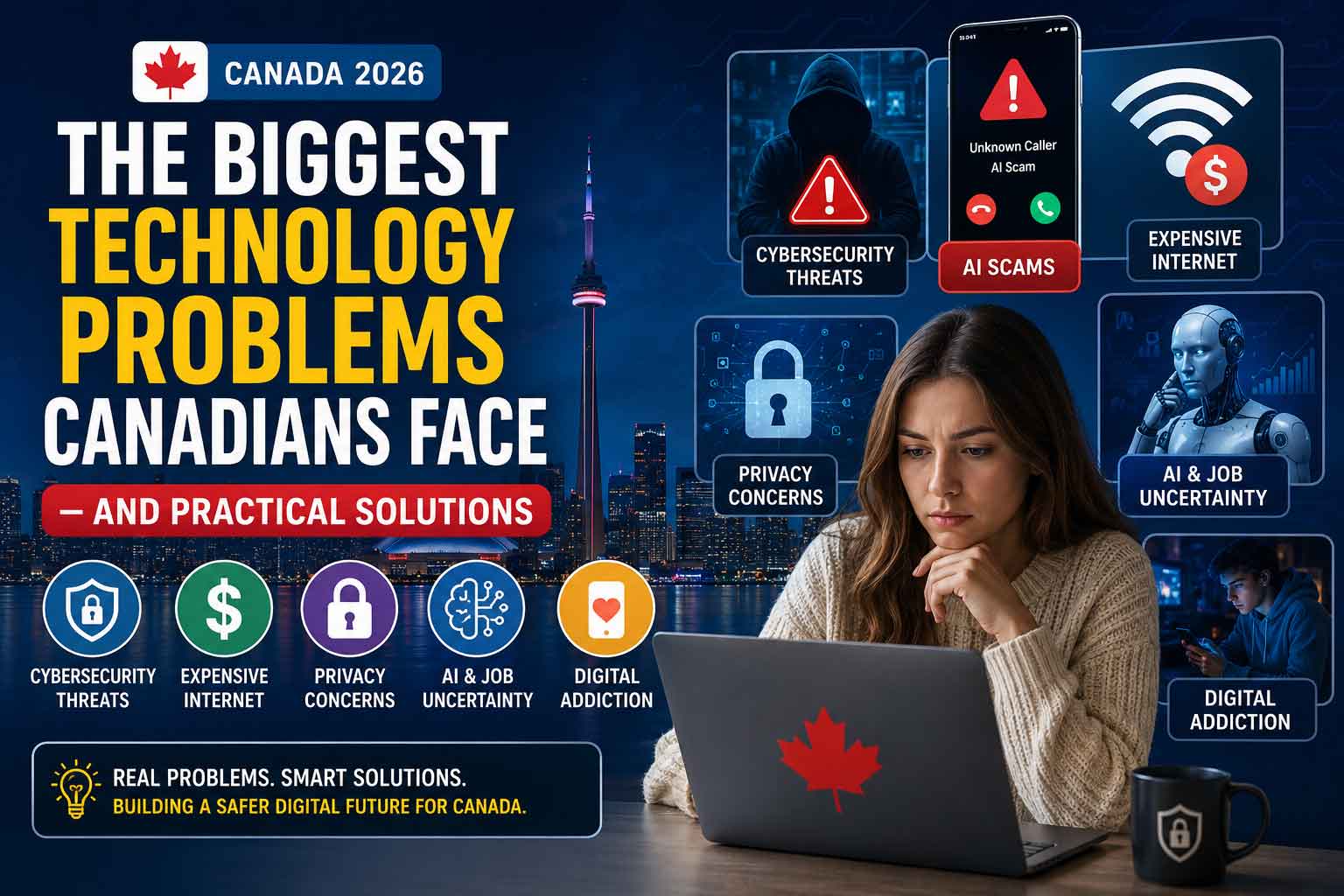
The Biggest Technology Problems Canadians Face in 2026 — And the Best Solutions and Websites to Fix Them
Technology has become deeply connected to everyday life in Canada. Canadians use smartphones, AI tools, online banking, smart home devices, cloud storage, streaming services, and social media platforms every day. While digital technology offers convenience and productivity, it also creates major problems that affect privacy, finances, mental health, and online security.
In 2026, Canadians are facing growing concerns about cybersecurity threats, AI scams, expensive internet services, online privacy violations, misinformation, and digital addiction. These technology challenges affect students, workers, businesses, seniors, and families across the country.
The good news is that there are trusted platforms, cybersecurity companies, privacy tools, educational websites, and digital safety resources that can help Canadians stay protected online. This guide explains the biggest technology problems Canadians face and provides practical solutions along with useful websites that can help solve them.
Rising Cybersecurity Threats Are Putting Canadians at Risk
Cybersecurity threats in Canada continue to rise as hackers use artificial intelligence and automated systems to target internet users. Canadians now face phishing scams, ransomware attacks, identity theft, banking fraud, fake CRA messages, and AI-generated voice scams.
Many cybercriminals create highly convincing fake emails and text messages that appear to come from trusted organizations. Seniors are among the most vulnerable groups because they are often less familiar with evolving digital scams.
The increase in AI scams targeting Canadian citizens has made online safety one of the biggest technology concerns in the country.
Best Cybersecurity Solutions for Canadians
Canadians can improve online security by using strong passwords, enabling two-factor authentication, and keeping devices updated. Password managers and antivirus software can also help prevent hacking and malware infections.
Trusted Cybersecurity Websites and Tools
- Bitdefender Canada — antivirus and ransomware protection
- Norton Canada — cybersecurity and identity protection
- Malwarebytes — malware removal and online security
- 1Password — password management solution
- Canadian Centre for Cyber Security — official cybersecurity advice for Canadians
- Have I Been Pwned — check if your email was exposed in data breaches
Using trusted cybersecurity tools is one of the best ways Canadians can stay safe online in 2026.
Expensive Internet and Mobile Plans Continue to Frustrate Canadians
Canada is known for having some of the highest internet and mobile service costs in the world. Many Canadians struggle with expensive mobile plans, high-speed internet costs, roaming charges, and rising subscription fees.
Students, remote workers, gamers, and families often spend hundreds of dollars monthly on digital services.
Rural Canadians also face connectivity problems due to limited provider competition and weaker infrastructure.
Smart Solutions for Reducing Technology Costs
Comparing internet providers, switching to budget mobile carriers, and monitoring data usage can help reduce monthly bills. Canadians should also review unnecessary streaming subscriptions and software services regularly.
Helpful Websites for Affordable Internet and Mobile Plans
- WhistleOut Canada — compare mobile and internet plans
- PlanHub Canada — telecom comparison platform
- TekSavvy — affordable internet provider
- Public Mobile — budget-friendly mobile plans
- Starlink — satellite internet for rural areas
- CRTC Canada — official telecom regulations and internet information
These platforms can help Canadians find cheaper internet solutions and reduce digital expenses.
Privacy Concerns Are Growing With AI and Smart Devices
Many Canadians are worried about how companies collect and store personal data online. Social media apps, AI platforms, smartphones, and smart home devices continuously gather user information.
This creates serious concerns about surveillance, identity theft, targeted advertising, and unauthorized data sharing.
Artificial intelligence systems also raise questions about how conversations and personal information are processed.
Best Online Privacy Solutions for Canadians
Canadians can improve privacy by limiting app permissions, using secure browsers, enabling encrypted communication, and avoiding unnecessary tracking.
VPN services and privacy-focused tools can help users protect personal information while browsing online.
Trusted Privacy Protection Websites and Tools
- Proton VPN — privacy-focused VPN service
- NordVPN — secure online browsing protection
- DuckDuckGo — private search engine
- Brave Browser — privacy-focused web browser
- Signal Messenger — encrypted messaging app
- Privacy Commissioner of Canada — official privacy guidance
Online privacy protection in Canada is becoming increasingly important as AI technology expands.
AI Technology Is Creating Fear About Jobs and Employment
Artificial intelligence is transforming workplaces across Canada. Businesses are using AI tools for automation, customer service, content generation, analytics, and administrative tasks.
Many Canadians worry about AI replacing jobs, especially in industries like customer support, content writing, design, and office administration.
Freelancers and remote workers are also facing competition from automated systems.
How Canadians Can Adapt to AI Technology
Instead of avoiding AI, Canadians can learn how to use AI tools to improve productivity and career opportunities. Learning digital skills, cybersecurity knowledge, AI software, and data management can increase long-term employability.
Useful AI Learning Platforms and Career Websites
- Coursera — AI and technology courses
- LinkedIn Learning — professional skill development
- Google AI Learning — AI education resources
- IBM SkillsBuild — free digital skills training
- Khan Academy — beginner-friendly learning platform
- Future Skills Centre Canada — Canadian workforce training initiatives
Learning AI-related skills is one of the best ways Canadians can prepare for future technology changes.
Social Media and Technology Addiction Are Hurting Mental Health
Technology addiction has become a major concern in Canada. Many people spend hours daily on social media platforms, gaming apps, streaming services, and short-form video content.
Excessive screen time can lead to anxiety, sleep problems, reduced productivity, and social isolation. Teenagers and young adults are especially vulnerable to digital addiction.
Healthy Solutions for Reducing Digital Addiction
Setting screen time limits, disabling unnecessary notifications, and taking regular digital breaks can improve mental health. Parents should encourage outdoor activities and device-free family routines.
Helpful Mental Health and Digital Wellness Websites
- Centre for Addiction and Mental Health Canada — mental health resources
- Digital Wellness Collective — digital wellness education
- Headspace — mindfulness and stress management
- Calm — sleep and mental wellness support
- Screen Time Labs — parental control tools
- Common Sense Media — digital safety for families
Digital wellness and balanced technology use are becoming essential for healthy lifestyles in Canada.
AI Misinformation and Deepfake Content Are Becoming Dangerous
Artificial intelligence can now generate fake videos, manipulated audio, and misleading news articles. Deepfake technology is becoming increasingly realistic and difficult to detect.
Many Canadians are concerned about AI misinformation spreading across social media and online platforms.
How Canadians Can Detect Fake AI Content
Verifying information from trusted news sources and using fact-checking tools can reduce misinformation risks.
Trusted Fact-Checking and Verification Websites
- Snopes — fact-checking platform
- FactCheck.org — misinformation verification
- MediaSmarts Canada — digital media literacy
- Google Fact Check Explorer — fact-checking search tool
- CBC News — trusted Canadian news source
Improving digital literacy is one of the best defenses against fake AI content and misinformation.
Smart Home Devices Are Creating New Security Risks
Smart home devices such as smart cameras, smart TVs, voice assistants, and connected appliances are becoming more common in Canadian households.
However, poorly secured devices can become targets for hackers.
Best Ways to Secure Smart Home Technology
Changing default passwords, updating firmware regularly, and using secure Wi-Fi networks can improve smart home security.
Smart Device Security Websites and Tools
- Kaspersky Smart Home Security
- ESET Cybersecurity
- Wireshark — network monitoring tool
- Cisco Home Security
- Google Safety Center
Understanding smart home cybersecurity risks is becoming increasingly important in Canada.
The Growing Digital Literacy Gap in Canada
Many older adults and beginners struggle with modern digital technology. Online banking, cybersecurity practices, AI tools, and cloud services can feel complicated and overwhelming.
This lack of digital literacy increases the risk of scams and online mistakes.
Best Solutions for Improving Digital Literacy
Technology workshops, beginner tutorials, and community education programs can help Canadians build confidence online.
Helpful Digital Literacy Websites
Digital education is essential for helping Canadians adapt to future technology challenges.
Final Thoughts
Technology offers incredible benefits, but it also creates major challenges for Canadians in 2026. Cybersecurity threats, AI scams, online privacy concerns, expensive internet services, misinformation, and digital addiction are affecting millions of people across the country.
Fortunately, Canadians can reduce these risks by learning digital safety skills, using trusted cybersecurity tools, protecting personal data, and improving digital literacy. The websites and solutions listed above provide valuable resources for staying safer, smarter, and more secure online.
As technology continues to evolve, awareness and education will remain the most powerful tools for building a safer digital future in Canada.
FAQs About Technology Problems Canadians Face in 2026
1. What is the biggest technology problem Canadians face in 2026?
One of the biggest technology problems Canadians face in 2026 is cybersecurity threats and online scams. Canadians are increasingly targeted by phishing emails, AI-generated fraud, fake banking messages, identity theft, and ransomware attacks. The rapid growth of artificial intelligence has made scams more convincing and dangerous than ever before. Many Canadians are also worried about online privacy, expensive internet services, and AI replacing jobs. Learning cybersecurity basics, using strong passwords, and enabling two-factor authentication can significantly improve online safety.
2. Why is internet service so expensive in Canada?
Internet and mobile services are expensive in Canada because of limited market competition, infrastructure costs, and the challenges of providing coverage across large geographic regions. Rural areas especially face higher costs and fewer provider options. Many Canadians search for affordable internet plans and cheaper mobile services to reduce monthly expenses. Comparing telecom providers, using budget carriers, and reviewing internet plans regularly can help Canadians save money on digital services.
3. How can Canadians protect themselves from online scams?
Canadians can protect themselves from online scams by avoiding suspicious links, verifying unknown emails, and never sharing personal or banking information through text messages or phone calls. Using trusted antivirus software, enabling two-factor authentication, and creating strong passwords are important cybersecurity practices. Canadians should also stay informed about the latest AI scams targeting Canadian citizens and regularly monitor bank accounts for unusual activity.
4. Are AI scams becoming more common in Canada?
Yes, AI scams are becoming increasingly common in Canada. Cybercriminals now use artificial intelligence to create fake voice calls, phishing emails, deepfake videos, and fraudulent messages that appear realistic. These scams can target individuals, businesses, and seniors. AI-powered scams are harder to detect because they mimic real people and trusted organizations. Canadians should verify suspicious communications carefully before responding or sending money.
5. How can Canadians improve online privacy in 2026?
Canadians can improve online privacy by using VPN services, privacy-focused browsers, encrypted messaging apps, and secure passwords. Disabling unnecessary app permissions and limiting social media sharing can also reduce personal data exposure. Many Canadians are concerned about how apps, AI tools, and smart devices collect information. Using privacy tools such as secure browsers and encrypted communication platforms can help protect personal information online.
6. Is artificial intelligence replacing jobs in Canada?
Artificial intelligence is changing the Canadian job market by automating some tasks in industries such as customer service, administration, writing, and data processing. However, AI is also creating new opportunities in cybersecurity, software development, AI management, and digital technology. Canadians can prepare for AI-driven workplaces by learning digital skills, adapting to new technologies, and focusing on creativity, communication, and problem-solving abilities that AI cannot easily replace.
7. What are the dangers of smart home devices?
Smart home devices such as smart cameras, voice assistants, smart TVs, and connected appliances can create cybersecurity and privacy risks if they are not properly secured. Hackers may target weak passwords or outdated software to access home networks and personal data. Canadians can improve smart home security by changing default passwords, updating device software regularly, and using secure Wi-Fi networks with strong encryption.
Social media addiction can negatively affect mental health, sleep quality, productivity, and family relationships. Many Canadians spend hours daily using social media apps, video platforms, and digital entertainment services. Excessive screen time may increase anxiety, stress, and attention problems, especially among teenagers and young adults. Setting screen time limits, taking digital detox breaks, and creating device-free routines can help improve digital wellness.
9. How can Canadians identify fake AI videos and misinformation?
Canadians can identify fake AI videos and misinformation by verifying sources, checking trusted news websites, and using fact-checking tools. Deepfake videos and AI-generated content often spread quickly on social media platforms. Watching for unusual facial movements, robotic audio, or inconsistent details can help detect manipulated content. Canadians should avoid sharing unverified information online and rely on credible journalism sources.
10. What are the best cybersecurity tools for Canadians in 2026?
Some of the best cybersecurity tools for Canadians in 2026 include antivirus software, password managers, VPN services, encrypted messaging apps, and identity protection platforms. Popular cybersecurity solutions include:
Using reliable cybersecurity tools can help Canadians protect personal information, prevent online fraud, and stay safe while browsing the internet.